






The Waverly Espresso
The Veloso Family

Cerrado Mineiro, Minas Gerais, Brazil
ORIGIN

Natural
PROCESS

The VelosoFamily
PRODUCER

May–July
HARVEST TIME
N/A
WET MILLING

1066 MASL
ELEVATION

September–November
FLOWER SEASON

Spread in patios and sun-dried
DRYING

Cleaning and sorting after removing cherry
DRY MILLING

Red Catuaí
VARIETY
Peru Smallholder Farmers
San Ignacio, Cajamarca, Peru
ORIGIN
Washed
PROCESS
Smallholder Farmers
PRODUCER
July–November
HARVEST TIME
Cylindrical depluper, fermentation tank, washing tanks all on the farm
WET MILLING
1600–2100 MASL
ELEVATION
September–December
FLOWER SEASON
Dried on patios or in covered beds on each producer’s farm
DRYING
Sorted for size, density, and color
DRY MILLING
Bourbon
Typica, Caturra, Bourbon
Learn More
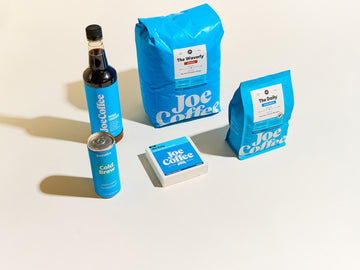
Lovingly named for our first café in New York City, The Waverly is our signature espresso. Seasonally driven but designed to achieve a balance of body and sweetness with lively fruit notes year-round, this espresso shines both as a straight shot and in milk.
We carefully sourced two components for this blend: a coffee from Brazil that lends a stable, sturdy body and rich sweetness, paired with a coffee from Peru that brings clean, well-integrated acidity.
Farmed in the Cerrado Mineiro region of Minas Gerais, Brazil, Veloso Coffee has been producing specialty coffees here for decades, passing down knowledge from generation to generation while embracing sustainable innovation. This coffee, grown on the Veloso family’s Paraiso and Santa Cecilia farms, exemplifies the microterroirs they study and cultivate with care. To prepare for selective mechanical picking, the family carries out a “mapping phase” that prioritizes only the ripest cherries. According to Mariana Veloso, this process depends on GPS technology: “Each year, we go to the same geographic coordinates and collect samples from the lower, middle, and upper thirds of the plants. With these results, we can plan a better harvest and post-harvest, and gather data about the maturation of specific varieties, plot nutrition, irrigation, and plant uniformity.”
The coffee is grown on wide plots surrounded by protected wildlife regions. The Velosos maintain 38% of their land as natural forest—well above the Brazilian regulation of 20%. For them, investing in reforestation and biodiversity conservation proves to neighboring farms that sustainability is essential to the collective future of coffee. This lot is naturally processed, dried on patios until it reaches 11.5% moisture content, and then dry-milled.
Its counterpart comes from the San Ignacio province in Cajamarca, Peru, near the Ecuadorian border. Known as the capital of Peruvian coffee, this area is rich in natural forests. The coffee, called El Guayacán after the region’s iconic yellow trees, is grown under their shade across northern Cajamarca.
Sourced through our partners at Caravela Coffee, El Guayacán is produced by about 300 smallholder farmers, each with 2–3 hectare plots. Caravela’s PECA program (“Programa de Educación a Caficultores”) provides these farmers with training in management, sustainability, and agricultural productivity, while strengthening connections between farmers, processors, importers, and roasters. Even as residual challenges from the COVID-19 pandemic remain, the program continues to support producers throughout Cajamarca.
El Guayacán is made up of Typica, Caturra, and Bourbon varieties grown between 1,600 and 2,100 MASL. Processing typically involves depulping with cylindrical depulpers, fermenting in small tanks, washing with fresh water, and drying on patios or covered beds for 10–15 days. Once dried, the coffee is sorted by size, density, and color at the dry mill before export.


The Waverly Espresso


Shop Coffee

Brew Guides
